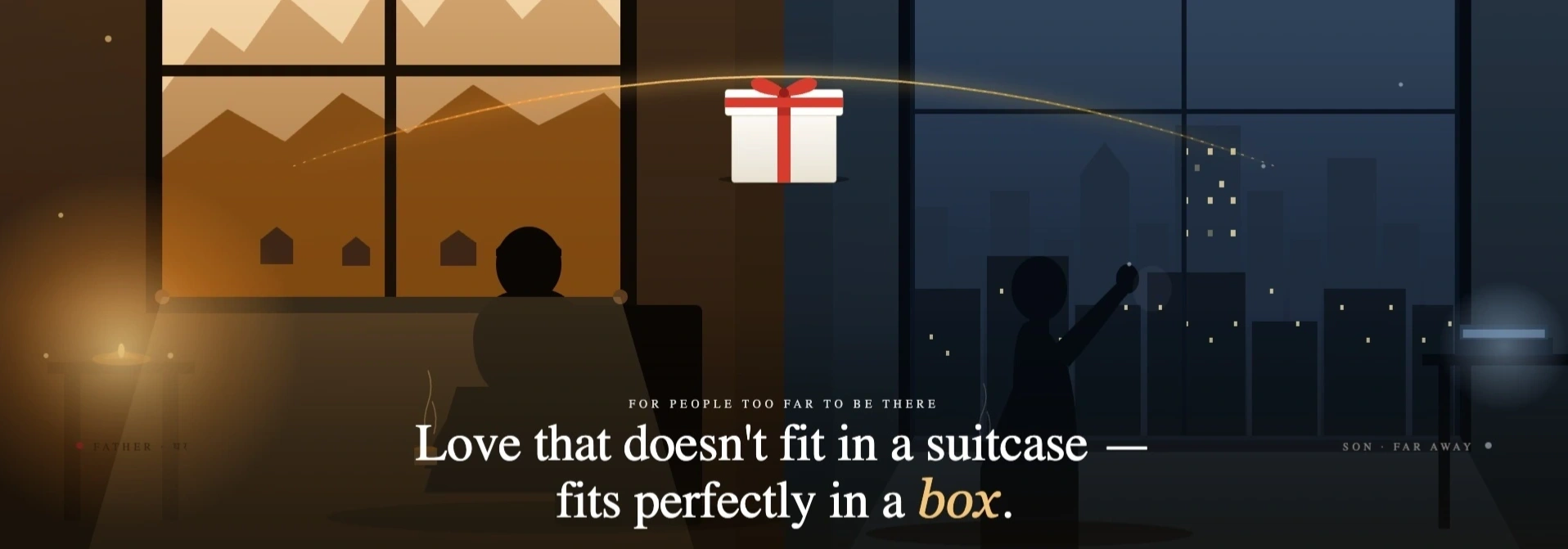
The Words That Never Came 📱
His son calls on Sundays.
Not because it's tradition. Because that's when the time zones align. When Baba is home from work. When the internet is stable enough.
"How are you?" Baba asks.
"Good. Work is busy."
Six thousand kilometers away, the son stares at his phone in an office in Singapore. Around him, people are laughing. Celebrating someone's promotion. He smiles, types something on the spreadsheet, and feels the weight of being absent from both worlds.
Eight months since he came here. Eight months since he promised his parents it was temporary. That he'd save, come back, buy land, settle down. The promise he makes and breaks in his head every Sunday call.
"Eat properly," Baba says. The same sentence. Every week.
The son wants to tell him: "I'm scared this won't be enough. That I'll stay away too long and you'll become a stranger I call once a week. That you'll age and I'll only see it in video calls."
But it comes out as: "Yes, Baba. I'm eating."
Baba wants to tell him: "I miss you. I see your empty room. Your mother looks at your photo in the morning. I'm proud of you, but I'm also lonely for my son."
But it comes out as: "Don't work too late."
The call ends. "Talk to you next Sunday, Baba." Same script every time.
---
Three months pass.
The son gets a promotion. A bonus. The money he came to earn. He should be happy. He is happy. But he's also alone. No one to celebrate with except a voice through a phone.
That's when he sees the gift notification. A friend back home sending his father something for Father's Day.
And something breaks open.
The son orders without thinking too much. A luxury watch. The kind Baba would never buy himself. Because Baba was the kind of man who worked with his hands, who didn't believe in wasting money on things that weren't necessary.
But watches are time. And the son had been thinking a lot about time lately.
The gift arrives at his parents' house on a Thursday.
He's at work when his mother calls: "Your father is wearing it. He won't take it off. He keeps looking at it. What did he do to deserve this?"
The son doesn't answer the question. "Tell him I said I'm proud to be his son."
That evening, Baba calls.
"Thank you for the watch," he says.
"You like it?" the son asks.
"Very much. But you shouldn't spend this way. You're far. You need to save."
The son closes his eyes. Even across the distance, his father is thinking about whether he has enough.
"Baba, the watch is for you to remember I'm thinking about you. Even from here. Even when I can't call. Even when I'm busy. That watch is me saying: your son sees you."
On the other end, silence. Then: "I understand, beta. I understand now."
---
The son realizes something: being far away doesn't mean you stop being a son. It just means you have to find new ways to say it.
Words get lost in time zones. Video calls freeze. Phone calls drop.
But a gift? A gift arrives. It sits in someone's hand. It gets worn. It becomes part of their day.
It says: I may not be there in the room with you. But I'm there in the choices I make. In the things I send. In the person I'm becoming, trying to make you proud.
---
Some sons leave home to build a future.
The best ones leave knowing they're building it for someone still waiting at home.
And sometimes, a watch is how you tell your father: I haven't forgotten you. I'm just on a different kind of journey. But you're still my compass. 🧭
— From a customer who sends gifts across oceans